AI scams Malwarebytes report • 2026
2026 AI Scams
How AI is reshaping trust, identity and scams
A visual essay on 1,500 people stepping back from the internet—and what they’re trying to protect when they do.
A visual essay on 1,500 people stepping back from the internet—and what they’re trying to protect when they do.
17 min • Published June 2026
17 min • Published June 2026
A counterfeit world is coming online.
It’s powered by AI.
Most people welcome AI tools—using them to write eulogies, fix dating profiles, clean up resumes. And yet caution remains high, as AI’s users are also its victims, navigating fake websites, fake products, fake videos, fake voices, even fake people.
Fraud, it appears, may overtake fact. Based on a survey of 1,500 adults across the US, UK, and DACH region, this report explores the help, the harm, and the humans forced to keep up. The internet now asks more of us than ever before.
CHAPTER 01
Reality breakdown
Nearly 9 in 10 can’t tell what’s real from AI anymore
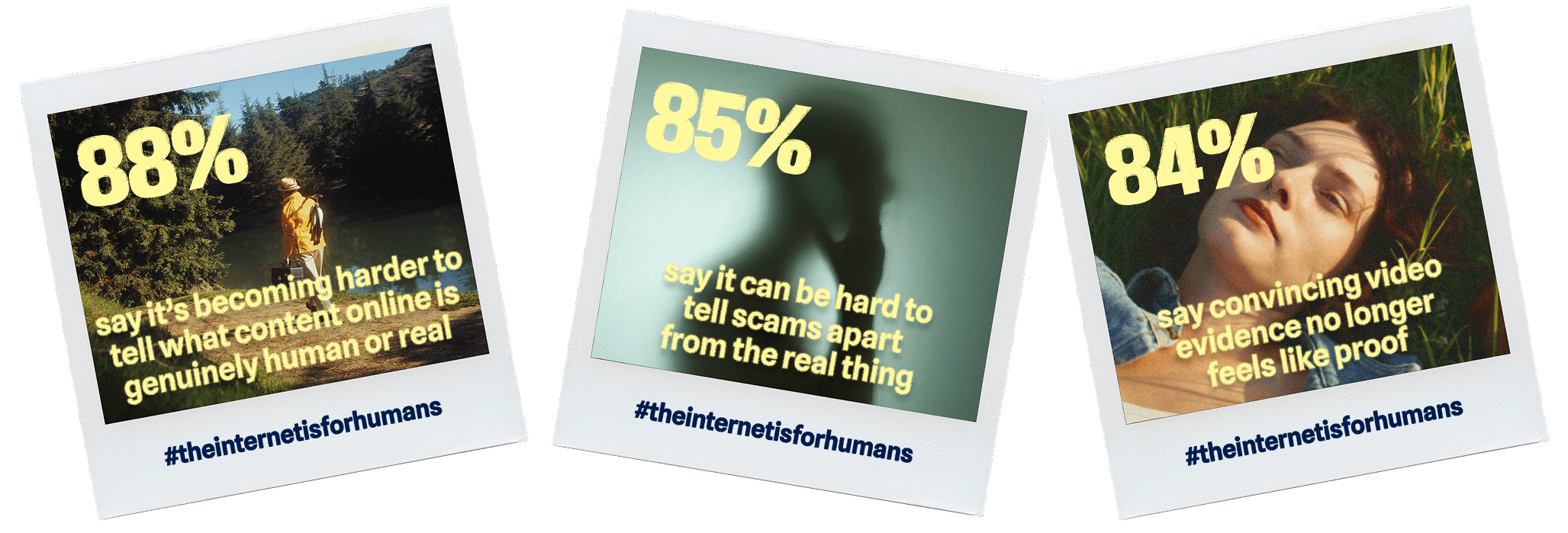
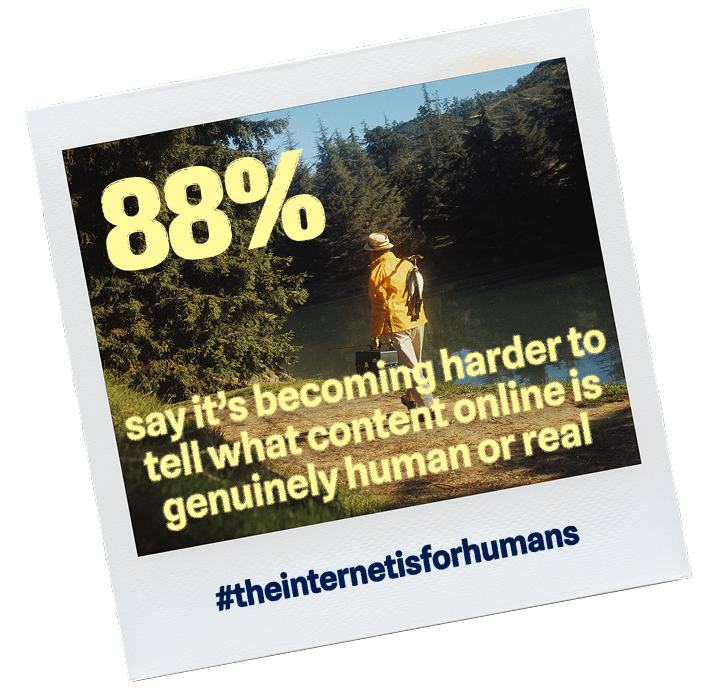
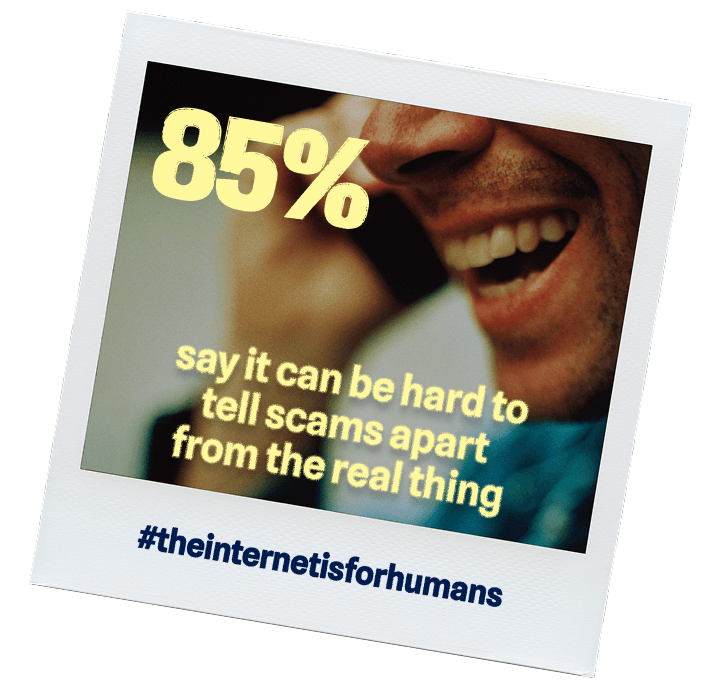
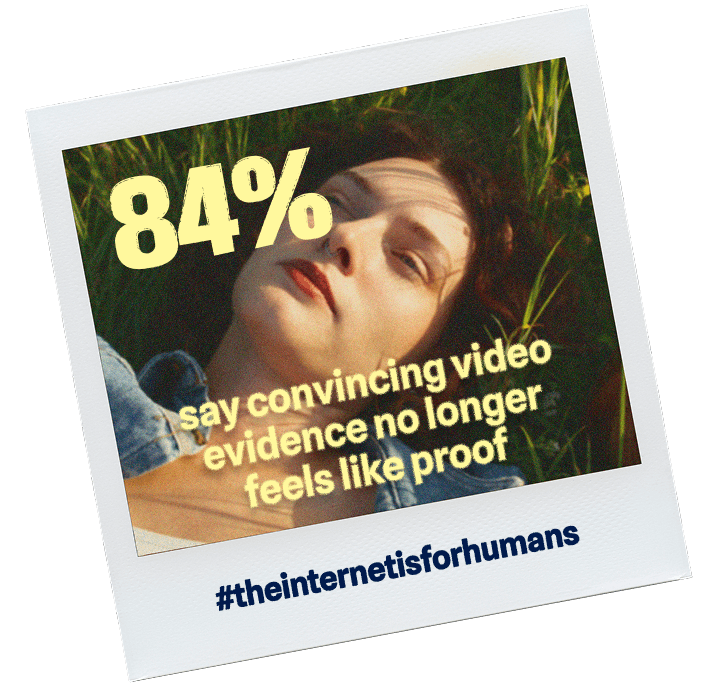
AI is casting doubt into everything we see. Once a trusted medium to show the truth, nearly everyone now says video evidence isn’t proof. Scammers are exploiting every crack, using AI to further blur the line between real and fake. Last year, 66% said it’s hard to tell scams apart from the real thing. Now, 85% agree. These findings hold across every region, age group, and level of AI use.
“Seeing more and more sophisticated fake posts on social media makes me think we’re quickly approaching a post-truth reality.”
YEAR OVER YEAR
The “I can’t tell anymore” curve is swelling
2025
said scams were hard to spot
2026
say the same thing now
CHAPTER 02
The AI scam revolution
50% have encountered an AI-driven scam
Image and video manipulation, voice cloning, and deepfakes have made it increasingly difficult for people to spot a scam. Scammers are using AI to exploit personal data and trusted relationships, driving widespread fear of personal identity harm. Nearly one in five adults have experienced this already; one in ten say they’ve had explicit images generated without their consent.
How AI scams arrive
Share of adults who’ve encountered each form in the past 12 months
“I received a call that sounded like a familiar person but was generated by AI. It was very frightening. Since then, I am much more cautious with unknown numbers and no longer immediately trust voice messages.”
Exposure is highest among Gen Z at 67% (vs. 51% Millennials, 46% Gen X, and 30% Boomers and older), and higher in the scam prone US (56% vs. 48% UK and 47% DACH).
GEN Z IS THE MOST EXPOSED
1 in 3
Gen Z adults have experienced AI-fueled identity abuse in the past year.
One in five have been impersonated. One in seven have had explicit AI-generated content created of them without consent—and just as many have had someone threaten to do so.
“I had someone make fake nudes of me using AI on my photos from my social media and threaten to post them.”
The shape of identity harm
19% of all adults have experienced at least one of the below. For Gen Z, it’s 30%.
CHAPTER 03
Pulling back, not gearing up
65% are stepping outside
As trust erodes due to AI threats, more than three in five are reacting by retreating—using social media less, removing old content, and posting less about themselves and their children. Yet while many fear how AI can be used against them, few are implementing AI-specific protective behaviors, and one in three have started ignoring security warnings altogether.
Reasons people are sharing less online
Fear doesn’t translate to action
are worried about having their family’s likeness stolen
have created a family code word
are worried about having their voice cloned
have turned off voicemail recording
worry about harm to their reputation
have done any data removal requests
worry about their photos being misused
have watermarked their photos
feel they have limited control over how AI affects their data or identity
feel overwhelmed with trying to keep up with AI risks
trust AI companies not to misuse their data
WHY PEOPLE ARE PULLING BACK
69%
would pay more to talk to a human
Across every region and age group, the human voice still wins. Nearly half of those scaling back say it’s because they want more in-person connection.
“I think AI can be used for good, but we need regulations on it.”
CHAPTER 04
AI is redefining moral standards
1 in 3 daily AI users say it’s okay to generate non-consensual nudes
The rules around AI are being written in real time, and they’re evolving quickly. Nearly one in five think it’s okay to with date an AI chatbot. Nearly half say it’s okay to use AI for deeply personal tasks like writing wedding vows. Many use cases that are acceptable are in direct contradiction of what people fear from AI.
What people now think is “okay.”
non-consensual explicit images (if personal use only)
a romantic relationship with an AI chatbot
explicit images of strangers you don’t know
imitating someone’s voice / appearance for personal use
THE CONTRADICTION
The tools people fear are the tools they’re using
“It’s just another tool.”
Nearly two-thirds say using AI for writing is no different than spellcheck. More than half say using AI for work is no different than Google.
think using AI for writing is the same as using spellcheck
think using AI for work / school is the same as using Google
think it’s okay to use AI for work or school
think it’s okay to submit AI work as their own
NO TASK TOO PERSONAL
47%
say it’s okay to use AI to draft messages to a loved one.
And 45% say using AI is acceptable for wedding vows or eulogies—tasks that would have been edge cases not long ago.

45% say it’s okay to use AI for personal emotional tasks (like writing wedding vows or a eulogy)
People feel two ways at once
Nearly half of adults simultaneously hold positive and negative feelings about AI, including the most active users. The benefits are real, but so are the risks. People are using AI more, accepting more of its use cases, and fearing it more—all at the same time.
Imitate voice or appearance for personal use
Only negative
Both positive and negative
Only positive
Four in five worry about how AI will affect future generations
WHERE DO WE GO FROM HERE?
Your voice, body, choices, and agency
In just a few years, the public has flocked to AI’s infinite answer machine. The one question people still don’t have an answer for is how to stay safe from its impact. Many have chosen digital retreat—an understandable but imperfect solution. The internet now requires assistance. We hope people know it’s safe to ask.
WHAT MALWAREBYTES IS DOING ABOUT IT
We meet AI’s threats so you don’t have to
Scam detection
Flag AI-driven fraud—scam texts, fake sites, voice-cloned calls—in real time across your devices.
Identity protection
Monitor for impersonation, leaked data, and AI-generated content using your face or voice.
Awareness
Plain-English guidance and small actions you can take in five minutes. No jargon.
METHODOLOGY
How we ran the survey
Malwarebytes conducted this research using an online survey prepared by an independent research consultant and distributed via Forsta among 1,500 adults age 18+ in the United States, UK, Austria, Germany, and Switzerland. The sample was balanced for gender, age, geography, and race, and weighted to provide a balanced view. Data was collected March 1–17, 2026. All verbatim quotes have been anonymized and are used solely for illustrative research purposes; all responses are handled in accordance with GDPR.
SHARE THIS REPORT