
A recurring lure in phishing emails impersonating United Healthcare is the promise of a free Oral-B toothbrush. But the interesting part isn’t the toothbrush. It’s the link.
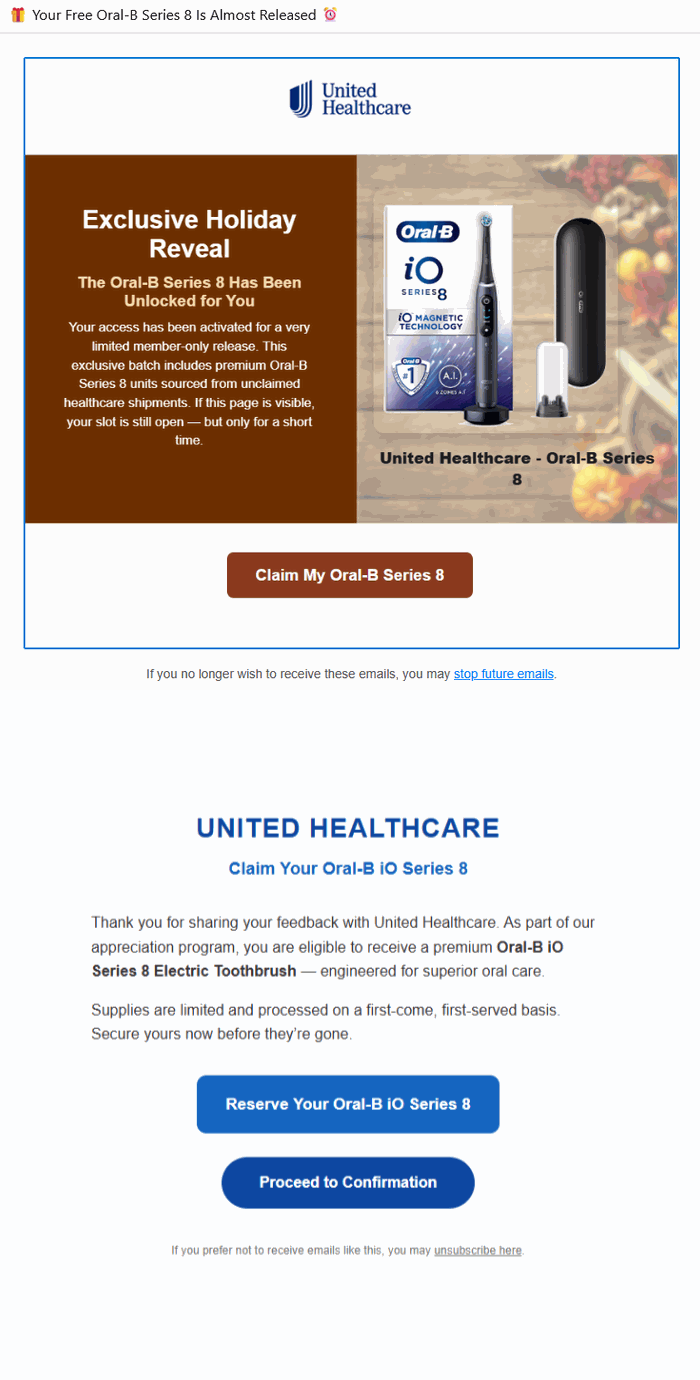
Recently we found that these phishers have moved from using Microsoft Azure Blob Storage (links looking like this:
https://{string}.blob.core.windows.net/{same string}/1.html
to links obfuscated by using an IPv6-mapped IPv4 address to hide the IP in a way that looks confusing but is still perfectly valid and routable. For example:
http://[::ffff:5111:8e14]/
In URLs, putting an IP in square brackets means it’s an IPv6 literal. So [::ffff:5111:8e14] is treated as an IPv6 address.
::ffff:x:y is a standard form called an IPv4-mapped IPv6 address, used to represent an IPv4 address inside IPv6 notation. The last 32 bits (the x:y part) encode the IPv4 address.
So we need to convert 5111:8e14 to an IPv4 address. 5111 and 8e14 are hexadecimal numbers. In theory that means:
- 0x5111 in decimal = 20753
- 0x8e14 in decimal = 36372
But for IPv4-mapped addresses we really treat that last 32 bits as four bytes. If we unpack 0x51 0x11 0x8e 0x14:
- 0x51 = 81
- 0x11 = 17
- 0x8e = 142
- 0x14 = 20
So, the IPv4 address this URL leads to is 81.17.142.20
The emails are variations on a bogus reward from scammers pretending to be United Healthcare that uses a premium Oral‑B iO toothbrush as bait. Victims are sent to a fast‑rotating landing page where the likely endgame is the collection of personally identifiable information (PII) and card data under the guise of confirming eligibility or paying a small shipping fee.
How to stay safe
What to do if you entered your details
If you submitted your card details:
- Contact your bank or card issuer immediately and cancel the card
- Dispute any unauthorized charges
- Don’t wait for fraud to appear. Stolen card data is often used quickly
- Change passwords for accounts linked to the email address you provided
- Run a full scan with a reputable security product
Other ways to stay safe:
- Keep your device and software up to date
- Use an up-to-date, real-time anti-malware solution with web protection enabled
- If you’re unsure whether something is a scam, Malwarebytes users can submit suspicious messages to Scam Guard for review
Indicators of Compromise (IOCs)
81.17.142.40
15.204.145.84
redirectingherenow[.]com
redirectofferid[.]pro
Something feel off? Check it before you click.
Malwarebytes Scam Guard helps you analyze suspicious links, texts, and screenshots instantly.
Available with Malwarebytes Premium Security for all your devices, and in the Malwarebytes app for iOS and Android.