What is a romance scam?
A romance scam is when someone pretends to fall for you online but is really after your money or personal details. These scams often start on dating apps or social media, where fake profiles are made to look warm, friendly, and trustworthy.
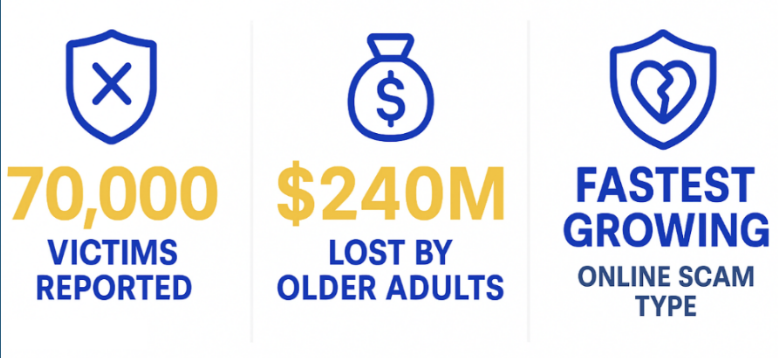
Scammers know they can’t rush it. They send affectionate messages, check in often, and make the connection feel genuine. Once they’ve earned your trust, the story changes and suddenly they’re in trouble and need help. That “help” might be cash, gift cards, or even access to your accounts.
It’s a mix of emotional manipulation and financial harm, leaving victims with a broken heart and an empty bank account.
How scammers trick people
Romance scammers don’t just lie, they play on emotions. A common trick is to say they’re working overseas or serving in the military. That story neatly explains why they can’t meet in person or hop on a video call, and it sets the stage for long-distance drama.
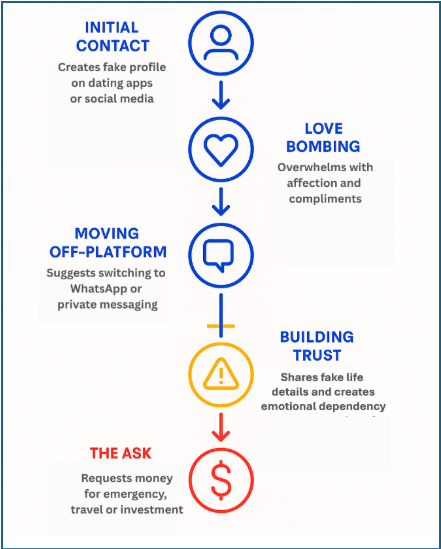
Many of them use what’s called “love bombing,” overwhelming you with compliments and talk of a shared future. It feels flattering, even real. Before long, they’ll suggest moving the chat to a private app like WhatsApp, where it’s harder for others to step in or report suspicious behavior.
By the time the request for money comes—maybe for a medical emergency or an urgent plane ticket—you’ve already invested feelings into the relationship. Saying no at that point can feel impossible.
Romance scams: red flags and common lies
Romance scams tend to follow the same script, full of emotional red flags and carefully rehearsed lies. If someone you’ve never met starts rushing the relationship, that’s a warning sign. Avoiding video calls or asking for money are others. When these patterns start showing up, it’s worth stepping back and taking a hard look at what’s really happening.
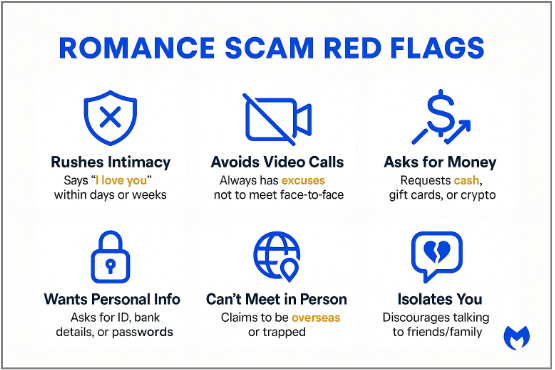
Scammers often throw out lines like “I’ve never felt this way before” or “I want to spend my life with you.” They say it early, long before there’s a real reason to trust them. And when you suggest meeting in person, the answer is always no.
We’ve already discussed plane tickets and medical emergencies, but other common lies include:
“My bank account is frozen.”
“I need to pay bribes or fees to leave the country.”
“This investment is our future, trust me.”
To make the money harder to trace, scammers often request:
- Gift cards and photos of the back with the codes
- Wire transfers via Western Union or MoneyGram
- Cryptocurrency sent to anonymous wallets
- Payments through apps like Cash App or Zelle
- Expensive electronics or goods shipped to a “friend”
Scam artists may also try to isolate you from people who could raise red flags, saying things like: “Don’t tell your family, they wouldn’t understand our love.”
Another major red flag: they ask for personal information or even your ID. This info can be used to commit fraud in a number of ways, or set you up to unknowingly help with criminal activity.
What victims of romance scams go through
Romance scams don’t just empty bank accounts—they leave deep emotional scars. Many victims are left feeling heartbroken, embarrassed, or even foolish once they discover the relationship was nothing but a con. Rebuilding trust, especially in future relationships, can be a slow and painful process.
The financial toll can be just as devastating. Some people lose a few thousand dollars, while others see their entire savings disappear. Stolen personal information can lead to identity theft, fake accounts opened in your name, or unauthorized transfers that take months—sometimes years—to resolve.
In some cases, victims are pulled into laundering money or helping with other scams without realizing they’re breaking the law, adding legal trouble to an already crushing experience.
How romance scammers choose their targets
Romance scammers target people of all ages, though those between 40 and 65 are hit the most. Scammers often look for emotional vulnerability, such as someone recently divorced or coping with loneliness.
They know how to scan dating profiles and social media for signs that a person might be open to attention. Those who struggle with technology are at higher risk, as they may miss online safety advice or fail to notice early warning signs.
A 2024 study found that the average romance scam victim is 52 years old, but age isn’t the deciding factor. Anyone searching for love online can become a target. What scammers really hunt for is emotional openness—and with tools like AI, they can reach out to more people and manage multiple fake relationships at once.
Newer types of romance scams
Romance scams and dating scams are evolving. Some newer versions go far beyond emotional manipulation. Today’s scammers are mixing love with digital blackmail and even in-person schemes that are designed to drain victims emotionally and financially.
Pig butchering scams
In a pig butchering scam, the scammer builds a long, elaborate fake relationship. They are proverbially “fattening up” the victim with affection and trust. Eventually, they introduce a fake crypto investment platform and convince the victim to deposit money. This is one crypto romance scam that we have seen growing in popularity. Once the victim has sent significant funds, the scammer disappears. This leaves them emotionally devastated and financially wiped out.
Webcam blackmail
It often starts with playful, flirtatious messages that lead to private video chats or sharing intimate photos. Without the victim knowing, the scammer records the explicit content and later uses it as blackmail, threatening to send it to family members or an employer unless they’re paid. Many victims panic and hand over the money to avoid embarrassment, only to find the demands keep coming.
Pro-dater scams
Unlike most romance scams, pro-daters meet their victims in person. They might seem genuinely interested at first, but before long you’re covering the cost of meals and outings. Some go further, hinting at expensive gifts or extravagant experiences they expect you to pay for. When they have taken all they can, they disappear and what felt like a real relationship is revealed as a calculated con.
You might remember the “Tinder Swindler,” a romance scammer exposed in a popular Netflix documentary. In it, you see how the scammer used charm and a flashy lifestyle to win people over and then drain their bank accounts.
How to protect yourself against romance scams
Whether the relationship is online or face to face with a pro-dater, the rule is the same: do not send money—and if you’ve never met in person, make it an automatic no. No matter how heartfelt or urgent their story sounds, it’s safer to assume the risk is real. Scammers know how to play on emotions until logic takes a back seat.
Keep your sensitive information private. That means no sharing bank details, ID numbers, or anything else that could be used against you with someone you only know online.
If they rush the relationship or constantly dodge video calls and in-person meetings, take it as a warning sign. Try a reverse image search on their profile photos—if the pictures are stolen, you’ll know you’re dealing with a fake.
Whenever possible, share what’s happening with a trusted friend or family member. An outside perspective can spot red flags you might miss, especially if you’re already caught up in the hope that the romance is real.
What to do if you’re being scammed
If you suspect you’re being scammed, cut off contact immediately. Don’t try to get closure or confront them first.
There are some other steps you can take to protect yourself and others from romance scams online:
- If you’ve already sent money, contact your bank or payment platform right away to see if the transaction can be reversed or flagged.
- Report the user on the dating or social platform where the scam started so their account can be investigated or removed.
- Try to establish if the photos they are using are real or belong to somebody else.
How to report a romance scam
Reporting helps stop future scams and may assist in recovering stolen funds. It is the right thing to do.
You can report romance scams to the Federal Trade Commission (FTC) at ReportFraud.ftc.gov and to the FBI’s Internet Crime Complaint Center (IC3) at ic3.gov.